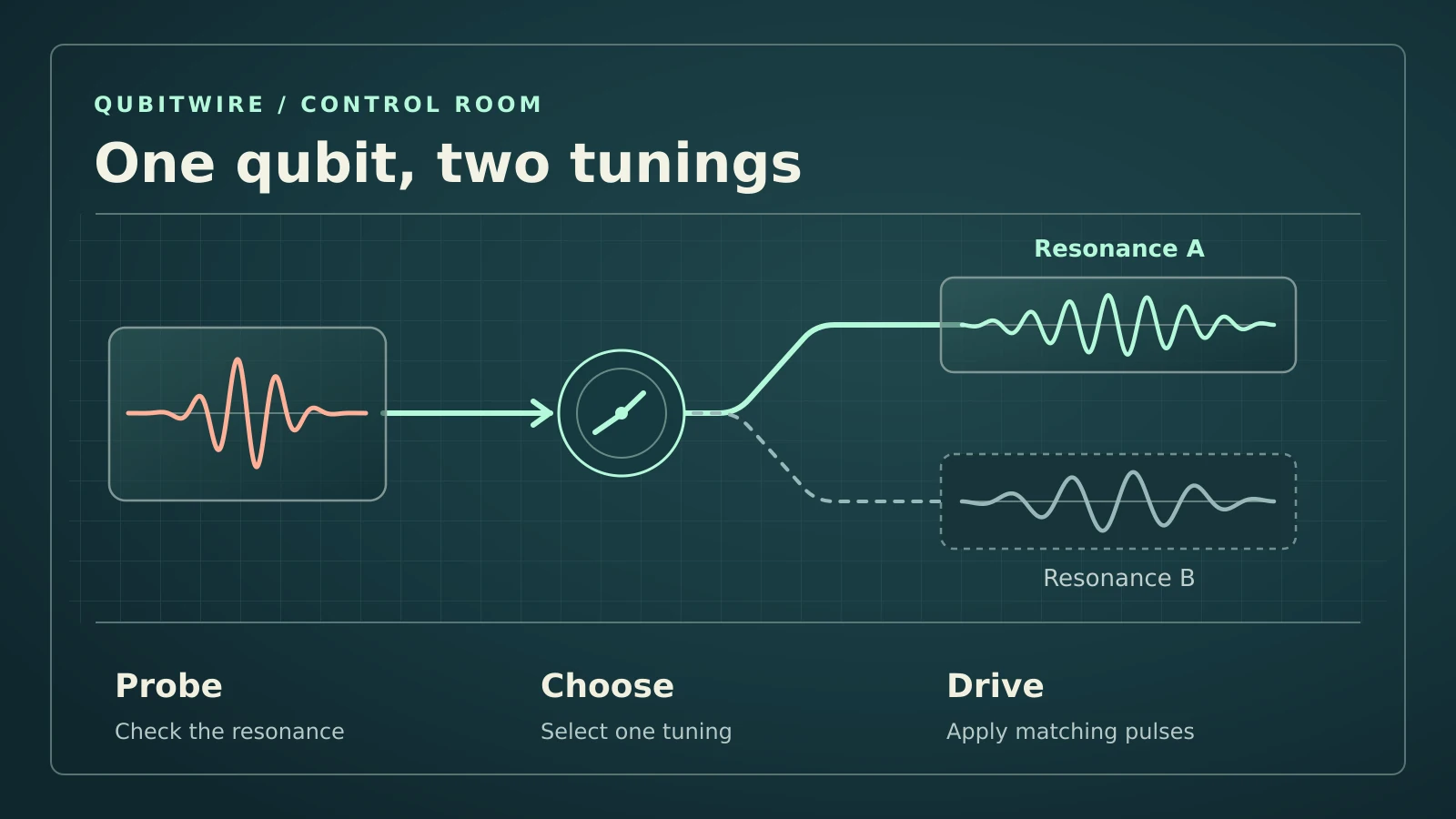
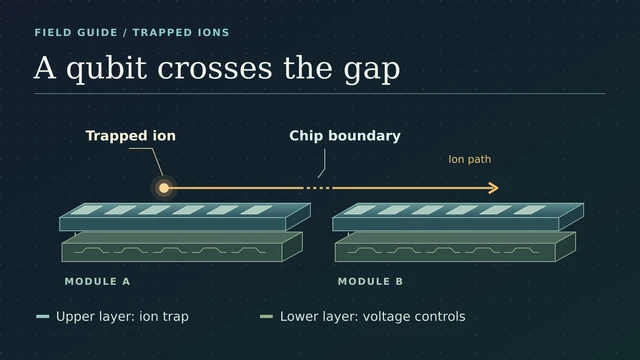
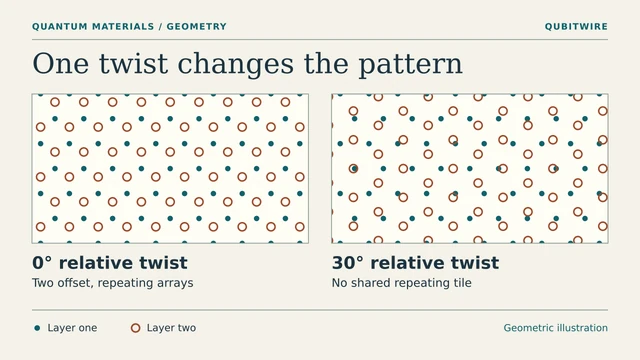
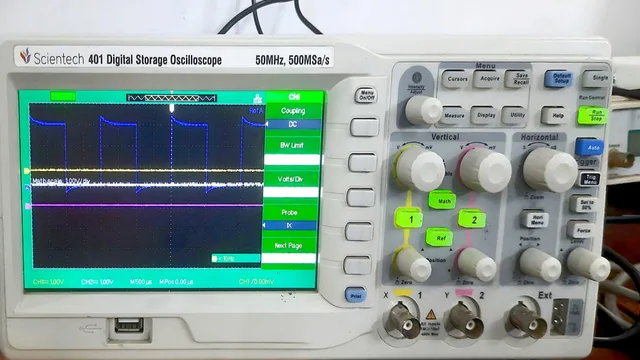
A diagnostic measurement chooses between two known resonance settings before gates run. The paths show control choices. They are schematic and are not measured signals.QubitWire illustration · Source · License
A shortcut developed to test quantum circuits can estimate the energy of a model magnet on an ordinary processor. Rearranging the same 100 spins changes the comparison.
Two silicon chip designs exposed a trade-off. Qubits made with Intel’s process resisted some electrical noise better, while RIKEN’s reference needed less microwave power to turn a spin.
A diffusion model generated synthetic samples using 303 simulated circuit measurements apiece. Giving each step the same budget took about four times as many measurements to match one quality score.
A new toolkit asks banks to map where they use cryptography, check which suppliers can support a change and set a timetable. A customer login shows why the work crosses company lines.
IDEMIA says its card platform passed an EMVCo evaluation. Banks can develop cards with new cryptographic capabilities while existing payment applications continue to work.
A measured link, a funding round and an integration agreement answer different questions. A bigger budget is not a faster gate. Read the evidence class before comparing the headlines.
Before you share
Ask what actually changed: a new measurement, journal publication of older work, available software or a future plan? Keep the sentence that prevents the likeliest misunderstanding beside the link.
Your next useful visit
Look for an independently tested clock, an operation across connected modules or a qualified manufacturing process. Another summary of unchanged evidence is not another breakthrough. Your Updates explains the existing browser-local choices; ordinary reading needs no save.
Choose a route according to the question you want it to answer.
Reader guideHome: follow a development through the kind of evidence that changedChoose the next page by asking whether the new evidence concerns a result, an interface, a business identity or a plan.Context reviewed +
Choose a reading route by asking what changed: a measured result, a software interface, a business identity or a future plan. A new filing can clarify ownership without changing a laboratory measurement. A paper can add peer review and a stable citation to work described earlier. A software release can make a method accessible without improving every workload.
Use News for the development and its chronology, Topics for the underlying concept, QRank for the organization and assessment evidence, and Investing for the listed instrument and business exposure. These pages can discuss the same organization while answering different questions. Keep the security identity, editorial assessment and measured result separate.
Try ending a reading session with two sentences: what changed, and what evidence would matter next? An accepted installation, a qualified manufacturing process and a reproducible workload answer different parts of that second question. Follow the next link when it addresses a specific gap in your understanding.
Questions to take with you
Which route should I use for an ownership change?
Start with the dated reporting and issuer evidence, then use the organization and Investing records for the resulting identities. Do not infer that ownership alone changed the underlying technical measurement.
Must I follow every link?
No. Stop when you can state what changed and what remains unresolved. Choose the next route only if it answers a question you actually have.